Lead Generation
7 Things to Look for in a Solar Lead Generation Agency Before You Hire One
A solar lead can cost ₹200, ₹1,200, or much more, so now, what do you think is better? The cheaper o...
22 Sept 20266 min read
Read Post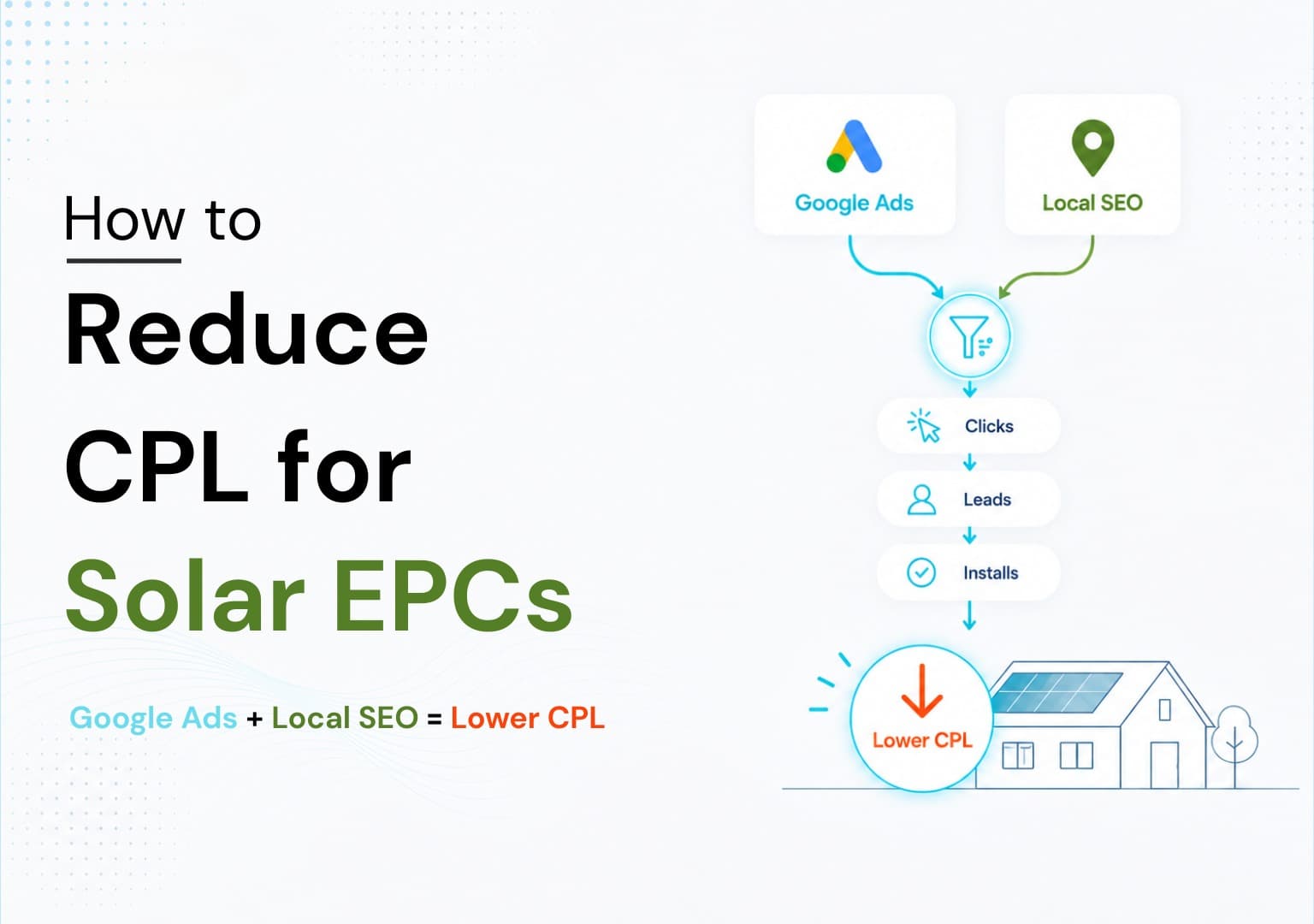
Here’s a number that should bother you: $104.
That’s the average cost per lead that solar companies pay to run Google Ads right now. And if you’re relying on non-branded keywords, it jumps to $149 per lead, not per sale, per form fill, many of which your sales team will never close. (Source)
For a solar EPC business trying to build a steady pipeline, that math gets ugly fast.
The good news? There’s a way out, but it requires stopping the habit of treating Google Ads and local SEO as separate choices; they’re not. They’re two gears in the same machine, and most EPCs only use one.
Google Ads isn’t broken; it’s just expensive when it’s doing all the heavy lifting by itself.
The average cost per lead across all industries hit $70.11 in 2025, and solar sits well above that average, with residential solar keywords facing serious auction pressure from national installers and private equity-backed brands who can outbid smaller EPCs without blinking. (Source)
87% of industries saw CPC increases in 2025, and solar wasn’t spared. When a national brand walks into an auction you used to own, everyone’s cost per click rises, regardless of how well-built your campaign is. (Source)
But here’s the part people overlook. It’s not just the cost per click; it’s what happens after.
A homeowner searching “residential solar installation quote” and clicking a paid ad should land on a page specifically about residential solar installation, not a homepage, not a general “get a quote” page. When the page matches the search, the form fill rate improves. When paid traffic goes to a generic page, conversion rates drop, and the cost per lead increases even though the cost per click stays the same.
So you’re paying more per click and converting fewer of them. Double damage.
If you want to understand the full picture of why solar ad campaigns bleed budget from the start, we broke that down separately in Why Your Residential Solar Ad Campaigns Fail.
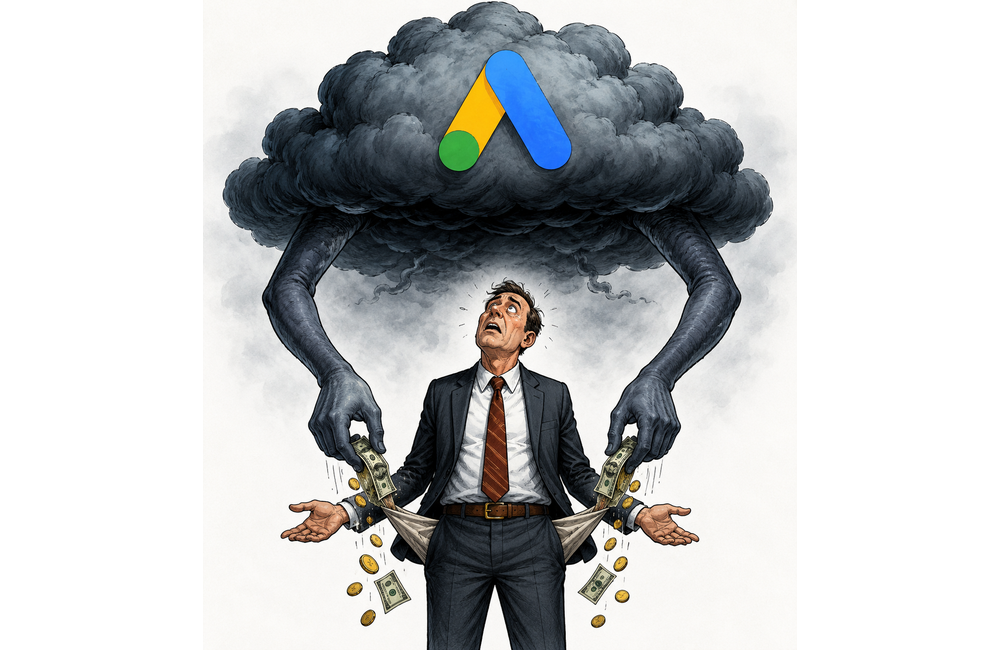
Solar companies are paying $80–$250 per lead from third-party aggregators, and with close rates under 15%, customer acquisition costs can spiral fast. Local SEO attacks this from a completely different angle. (Source)
At roughly $20,000–$30,000 revenue per residential installation, one extra monthly close from organic search can cover a $1,500/month local SEO program many times over. That’s not a marketing pitch. That’s just arithmetic. (Source)
The difference between a paid lead and an organic one isn’t just cost. It’s intent quality.
A shared lead purchased from an aggregator carries a low sticker price and a low close rate. The homeowner who submitted a form on a solar comparison website did not choose your company. An exclusive lead generated through your own Google Ads or organic presence costs more per inquiry, but the homeowner specifically searched for and found you.
Local SEO builds that second kind of pipeline slowly, but it compounds.
Solar companies should target a mix of location-based and intent-driven keywords. High-intent searches like “Jaipur solar installers” and “solar companies near me” capture prospects ready to book. Informational searches like “how much do solar panels cost in Rajasthan” capture buyers earlier in the research process, supporting long-term organic growth.
Both matter. The trick is which channel handles which.
Here’s the honest way to think about it.
Google Ads is a faucet. Turn it on; leads come in. Turn it off; the pipeline freezes immediately. The underlying danger of relying purely on performance marketing is clear: the moment you stop spending, your lead flow completely freezes.
Local SEO is an asset. It takes 4–6 months to build real traction, but once it’s there, it keeps producing without a daily ad spend attached to it.
The companies seeing the strongest results usually don’t rely on just one channel. They build a local SEO foundation first, then use paid ads to capture additional demand.
For solar EPCs specifically, this is how the split should actually work:
Google Ads handles: Ready-to-buy searches. “Solar panel installation [city]”, “Solar installers near me”, “Get a solar quote.” These people are comparing right now. You need to be in front of them today, not in six months when your SEO kicks in.
Local SEO handles: The longer research cycle. Cost calculators, subsidy explainers, “solar vs electricity bill” comparison content, city-specific landing pages, and Google Business Profile. This is where trust is built over weeks before someone ever submits a form.
Local Service Ads average $53 per lead for solar companies, which is 49% less expensive than blended Google Ads at $104 per lead. Worth testing alongside your standard search campaigns, particularly for residential solar lead generation in competitive local markets.
Don’t just “do SEO.” That phrase means nothing. Here’s what it actually looks like for a solar EPC:
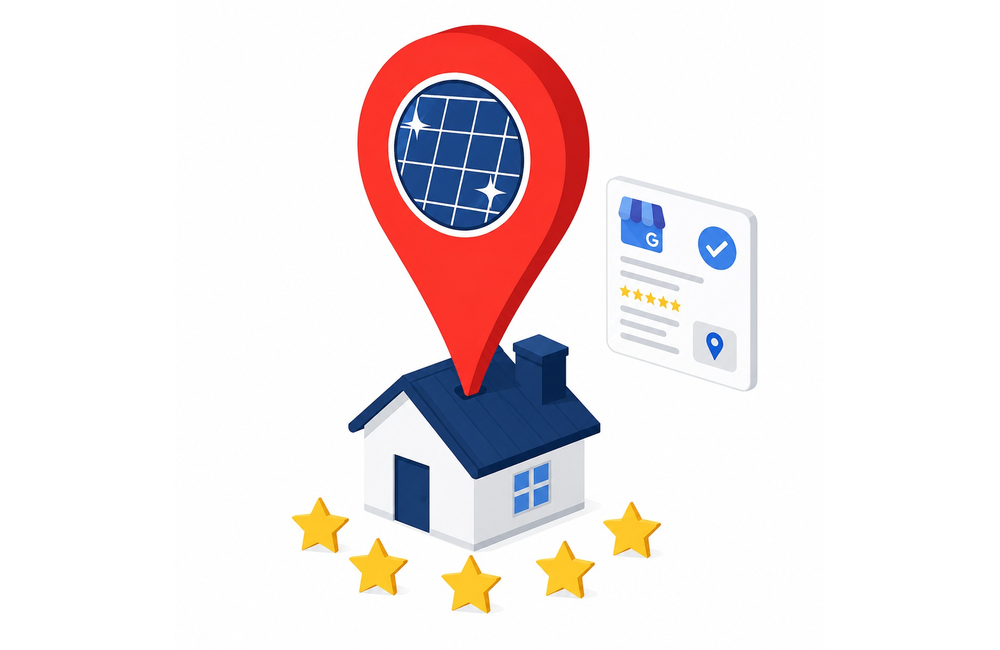
Google Business Profile: Add all relevant services such as rooftop solar installation, commercial solar systems, and solar battery storage. Upload recent, high-quality photos of completed local projects. Use Google Posts to share project updates, customer reviews, or seasonal offers. Monitor and answer questions in the Q&A section to remove buyer friction. This alone moves Map Pack rankings
City landing pages: Real ones, not spun suburb pages where you swapped one city name for another. A proper city page targets “Solar Panel Installation in Jaipur” as the H1, includes deep localized context around regional electricity boards, dedicated breakdowns of state-specific net metering rules, and actual photographs or project portfolios from that specific area. Google rewards specificity. Thin pages get ignored.
Separate service pages: Dedicated pages for residential solar, commercial solar, and battery storage allow Google to rank the most relevant page for each query while giving users a clearer path to conversion. One catch-all “solar services” page splits your authority across every keyword you care about.
Review velocity: Encouraging customers to leave reviews and actively replying to both positive and negative reviews signals trust to both Google and potential customers. Solar is a big decision. People read reviews like they’re doing due diligence, because they are.
This part kills me because it’s so fixable.
Follow-up speed is where solar companies lose the most leads without realizing it. A homeowner who submits a solar inquiry and does not hear back within the hour is not waiting patiently; they’ve moved on to one of the other installers they contacted.
Industry research shows the first solar company to respond wins the sale 78% of the time.
Think about that you can spend $149 on a lead, have a perfectly targeted ad, a great landing page, a strong offer, and still lose the deal because someone on your team answered a different inquiry first.
The fix isn’t expensive. It’s a CRM with an auto-response, a follow-up sequence, and someone whose actual job is to call within the hour. That’s it.
This is where the mindset shift has to happen.
Cost per lead measures the top of the funnel. It says nothing about whether that homeowner was qualified, whether they answered the follow-up call, whether the roof passed the site assessment, or whether they signed a contract.
A $40 lead that never closes is worse than a $120 lead that converts 1 in 3 times. But most EPC reporting stops at the $40 and calls it a win.
Track from impression to install. Map which channel, which keyword, and which landing page produced closed deal, not form fills but deals.
93% of buying journeys start with a search engine, and solar companies that own page-one rankings capture a disproportionate share of high-intent, ready-to-buy leads without paying per click. But “owning page-one” is a result of months of consistent SEO work, not a thing that happens by accident.
If you read this and recognized your own campaigns in half of it, that’s not a coincidence. Most solar EPCs and installers are running the same broken funnel with the same gaps.
The difference is what you do next.
R-DGTL works exclusively with solar companies, not for SaaS, not e-commerce, but solar. Which means the targeting problems, landing page mistakes, and attribution gaps covered above aren’t theory for us. They’re what we fix daily as a dedicated solar EPC marketing agency for installers, distributors, and multi-state solar brands trying to build a pipeline that doesn’t collapse the moment ad spend drops.
We’ve run this exact system for clients spending anywhere from ₹50K to ₹10L+ per month on solar lead generation. The playbook isn’t complicated, but the execution is.
Book a free strategy audit, and we’ll tell you exactly where your current campaigns are leaking qualified leads. No pitch deck, no vague recommendations, but just a clear look at what’s broken and what to fix first.
Book a free strategy call with India's solar-only performance marketing agency.
Book Free CallPrefer WhatsApp? Message us directly.
💬 WhatsApp UsShare this article:
R-DGTL Team
India's solar-only performance marketing agency. We help EPC companies, panel distributors, and BESS brands generate qualified leads and grow their business through performance marketing.
“Most solar companies have a great product and an empty pipeline. We fix the pipeline.”Fayyaz Khan, Director, R-DGTL
A solar lead can cost ₹200, ₹1,200, or much more, so now, what do you think is better? The cheaper o...
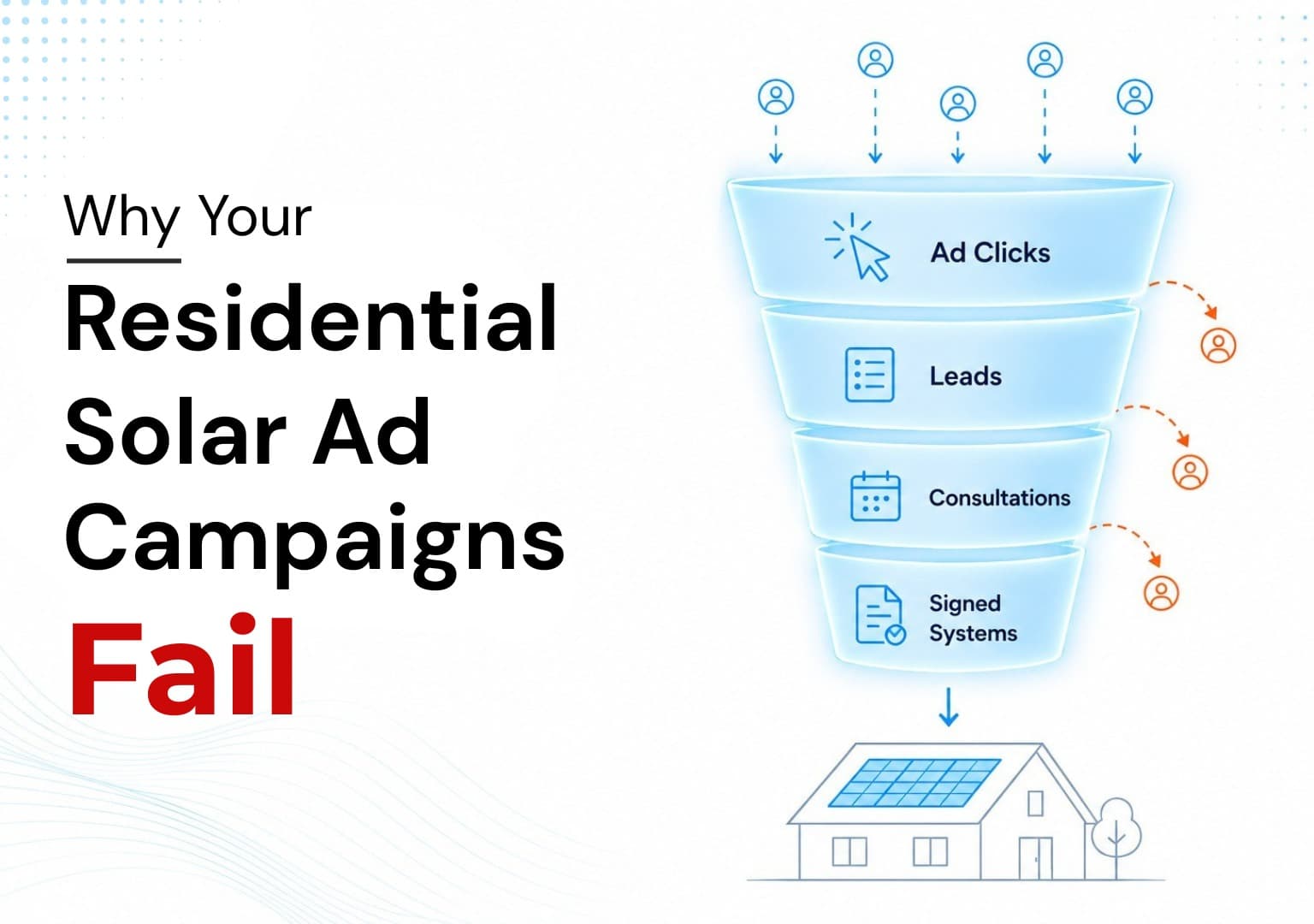
You're pouring money into residential solar ad campaigns. Clicks show up, leads trickle in, and your...
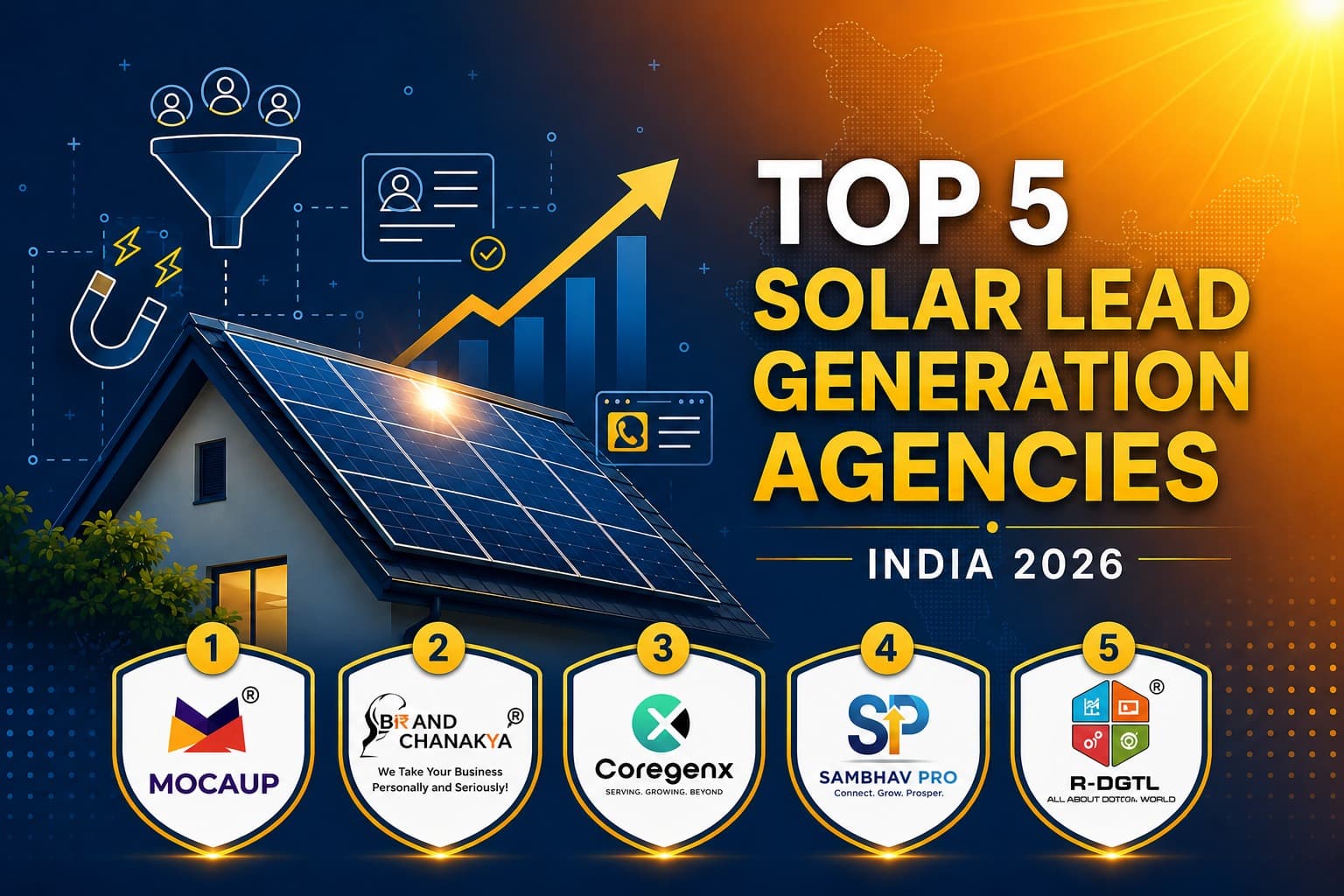
If you're running a solar business and reading this, you've probably realised something the hard way...