A solar lead can cost ₹200, ₹1,200, or much more, so now, what do you think is better?
The cheaper one, right? But not at all.
A ₹200 lead that never answers the phone is expensive. A ₹500 lead that becomes a site survey, proposal, and eventually a customer can be the better deal.
That’s the problem with choosing a solar lead generation agency by Cost Per Lead alone. We cannot judge the first step of the sales process while ignoring everything that happens after it.
Customer acquisition is already a serious cost for solar businesses. An NREL analysis of EnergySage’s installer survey found that customer acquisition averaged $792 per residential solar customer in 2021.
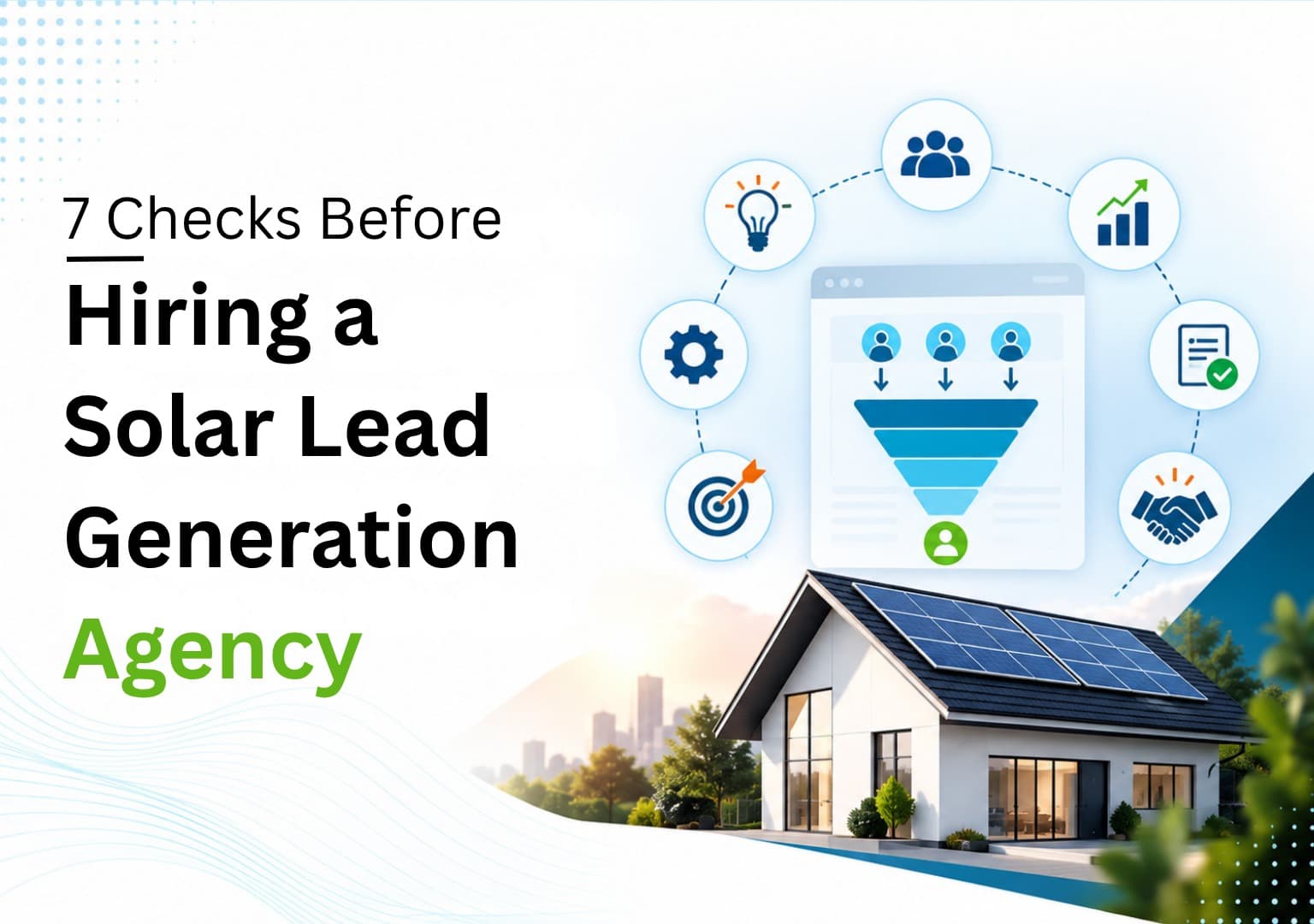
Before you hand that budget to an agency, here are seven things we think you need to check.
1. Does the Agency Actually Understand Solar?
“Digital marketing experience” isn’t the same as solar marketing experience. A solar EPC doesn’t sell like a software company, and a rooftop installer doesn’t sell like an inverter distributor. A BESS company may be speaking to procurement heads, plant managers, and engineers instead of homeowners.
Ask the agency:
- Which solar companies have you worked with?
- Do you understand residential, commercial, and industrial solar?
- Have you worked with manufacturers or distributors?
- Can you show results from businesses similar to mine?
If the agency needs its first three months to learn what an EPC, BESS, or site survey is, you’re paying for its education.
2. Can the Agency Show What Happens to Its Leads?
“Generated 1,000 leads” sounds impressive, but it also tells you almost nothing about revenue. Ask what happened after those leads came in.
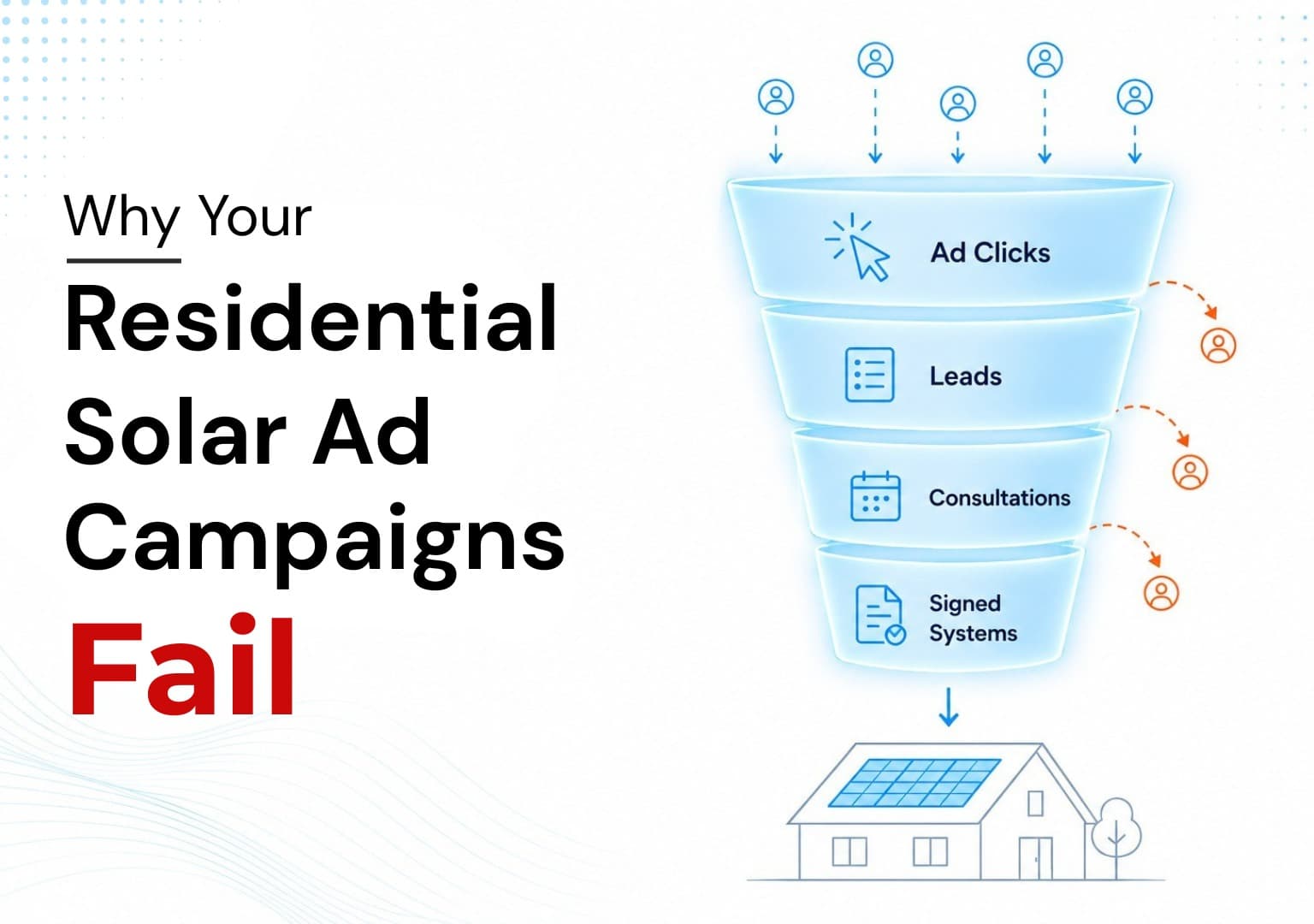
How many were qualified? How many turned into site surveys? How many received proposals? How many became customers?
One 2026 India-focused solar dataset reports an average of 20% from lead to site survey, 70% from survey to proposal, and 15% from proposal to close. Its top-performing EPC benchmark is 50%, 90%, and 35%. These aren’t universal industry benchmarks, but they show why the number of leads alone isn’t enough.
A serious agency should be comfortable discussing what happens after the form is submitted. If it only talks about impressions, clicks, and CPL, keep asking questions.
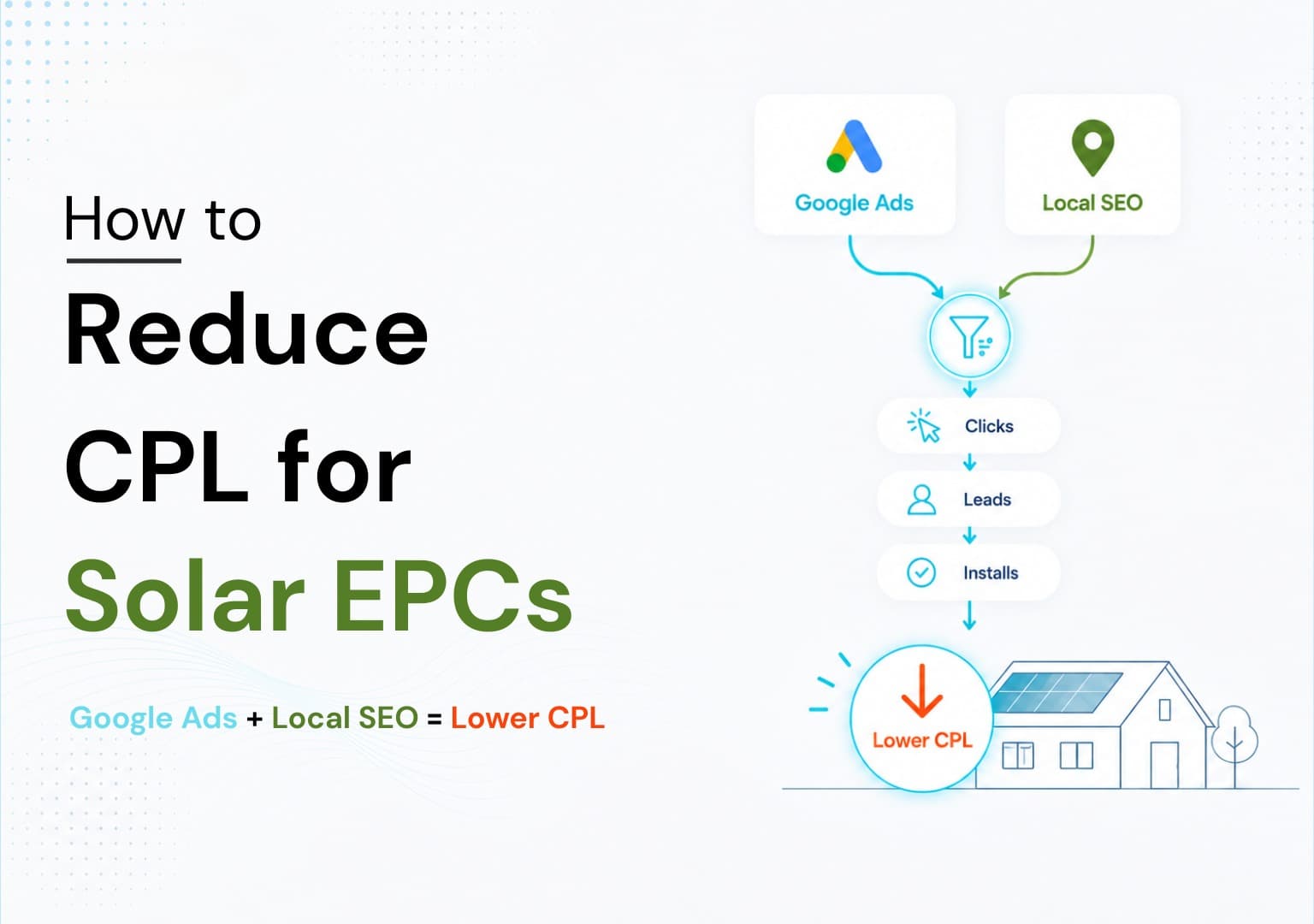
We’ve also looked at how solar EPCs can reduce CPL without losing sight of lead quality and conversions.
3. What Exactly Counts as a Qualified Solar Lead?
“Interested in solar” isn’t a qualification system. For a residential installer, qualification could involve property ownership, location, electricity consumption, roof suitability, and buying timeline.
For a commercial or industrial project, the questions change. Project size, electricity consumption, site conditions, decision-maker involvement, and project timeline may matter far more.
The agency should be able to tell you exactly what it considers qualified. Better yet, agree on that definition before the campaigns begin.
Otherwise, you can end up celebrating 500 leads while your sales team is wondering where the actual buyers are.
4. How Quickly Does the Agency Follow Up on New Leads?
Here’s a number worth remembering: an InsideSales study covering more than 55 million sales activities and 5.7 million inbound leads found that conversion rates were eight times higher when leads were worked within the first five minutes.
Five minutes, not tomorrow morning, so ask the agency what happens immediately after someone submits a form.
Does the lead enter your CRM, or does someone get notified? Does WhatsApp follow-up begin, or who makes the first call?
Generating the lead is only part of the job, but what happens next can decide whether that lead goes anywhere.
5. What Does Each Customer Actually Cost You?
A low CPL looks good in a report, but it can hide a bad business result.
One 2026 India-focused solar dataset puts paid solar lead costs at roughly ₹80 to ₹1,200+, depending on the channel and lead quality. So imagine two campaigns.
Campaign A generates leads at ₹200 each, but only 5% become customers. Campaign B generates leads at ₹400 each, but 15% become customers.
Which campaign would you rather have? Probably B; that’s why the better question isn’t, “What’s your CPL?” It’s, “What does it cost us to acquire a customer?” Those are very different numbers.
So, judging an agency by CPL alone would not help in making the right choice for you.
6. Know Where Every Lead Came From
This sounds obvious. If an agency is generating or supplying leads, ask where those leads actually came from.
Was it Google? Meta? SEO? An affiliate? A third-party database?
Are the leads exclusive? Are they shared with other solar companies? Who owns the lead data? How are duplicate or invalid leads handled?
These questions help you to literally see what source is generating what and let you analyze your further marketing strategy while focusing on revenue-generating streams as well.
ActiveProspect’s guidance for solar lead buyers recommends asking about lead source, delivery time, duplication, and whether leads are sold to multiple buyers. You shouldn’t have to play detective with your own leads.
7. Does the Agency Check the Full Customer Journey?
This is the question most businesses don’t ask. What if your ads are working?
What if the real problem is a landing page that converts badly? Or poor qualification? Or slow follow-up? Or leads coming from cities your installation team doesn’t serve?
More leads won’t fix those problems.
A good agency should be willing to look at the entire customer journey and find where potential customers are dropping away and then fill the gap.
Sometimes the answer isn’t “spend more.” Sometimes it’s “fix this first.” That’s a much more useful conversation.
What Should You Really Look for in a Solar Lead Generation Agency?
Choosing a solar lead generation agency shouldn’t come down to who promises the most leads or the lowest CPL. We believe the better question is whether your marketing spend is turning into a measurable sales pipeline.
As a solar-only performance marketing agency, we at R-DGTL work exclusively with the renewable energy industry, helping brands generate and manage qualified demand through solar lead generation, SEO, social media, BESS marketing, branding, and conversion-focused website development.
We have served 180+ solar brands across our campaigns. We look at what happens after the enquiry too, including lead quality, qualification, follow-up, and the sales opportunity behind each campaign.
If your solar business needs more than a monthly lead count, contact us to build a lead-generation system around the numbers that actually matter.