
Lead Generation
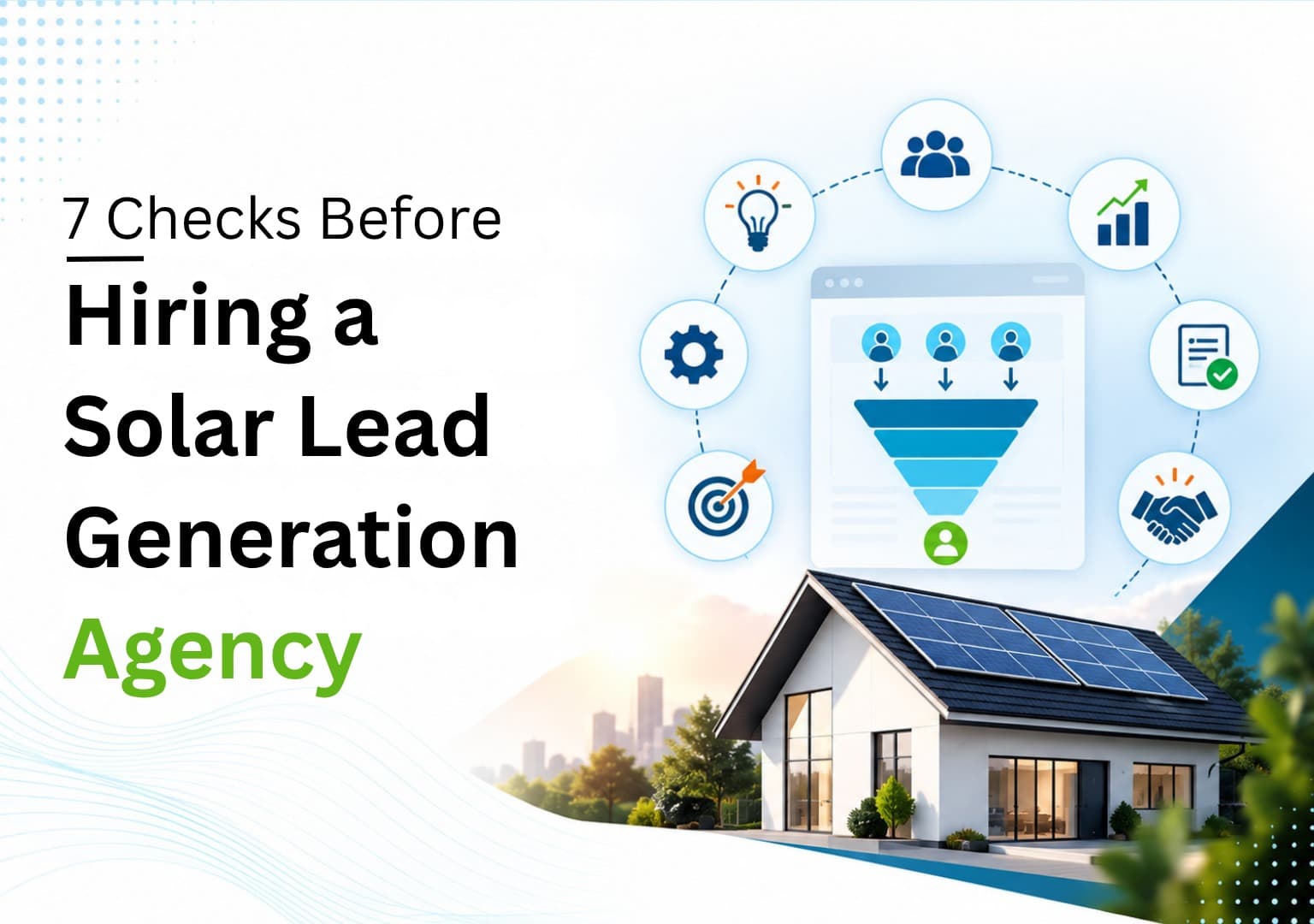
7 Things to Look for in a Solar Lead Generation Agency Before You Hire One
A solar lead can cost ₹200, ₹1,200, or much more, so now, what do you think is better? The cheaper o...
22 Sept 20266 min read
Read Post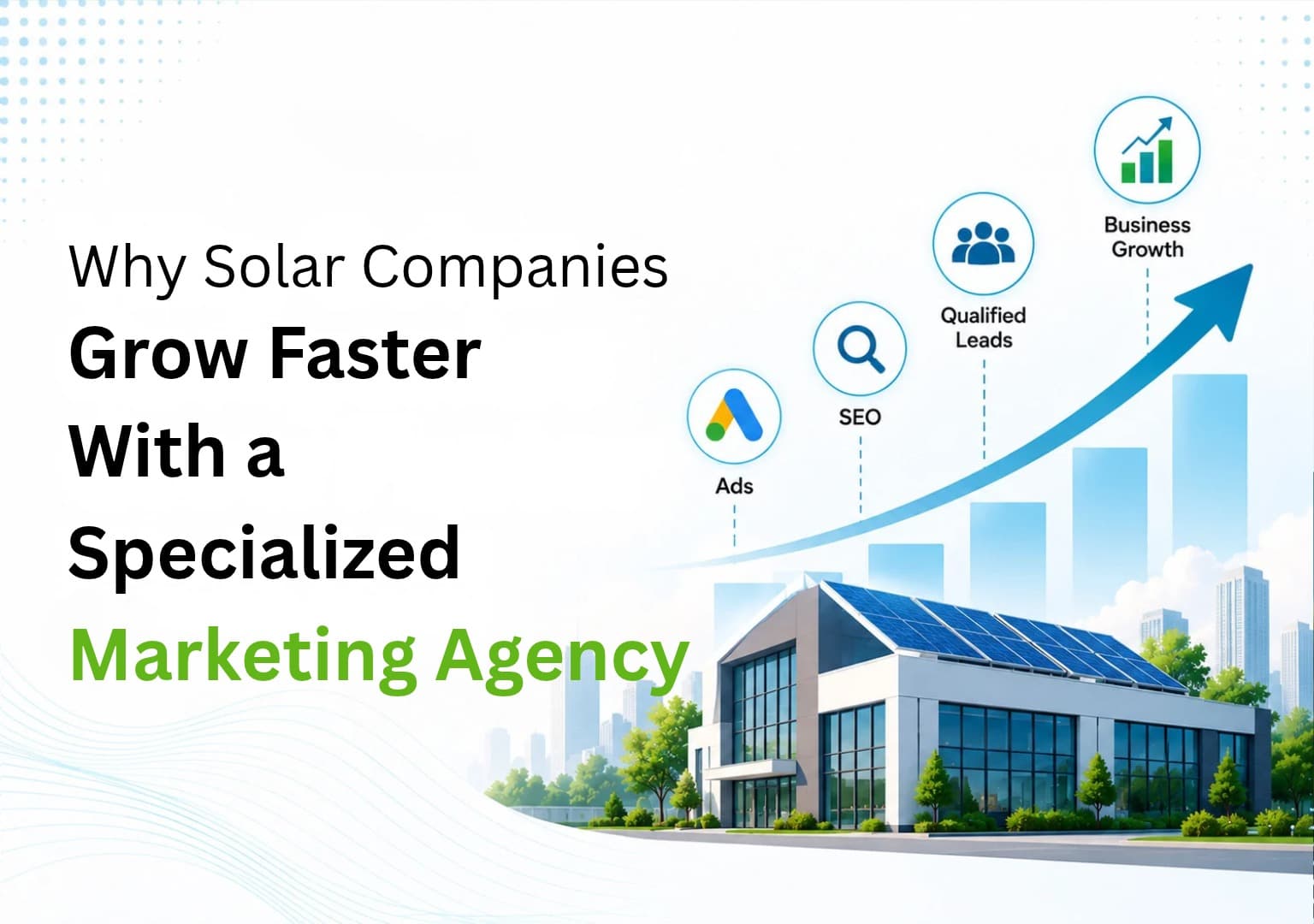
As of August 2026, the MNRE data revealed that India’s installed solar capacity stood at 168.31 GW. The country installed approximately 35.2 GW of solar power in the first nine months of 2026 alone, and the rooftop solar installation stood at approximately 33.4 GW. On the housing side, PM Surya Ghar has now reached 60 lakh households.
This is good news for demand, but difficult to stand out. Both new installers, EPCs, and distributors are vying for the same customers, factory owners and dealers, and using the same message: “Save on electricity bills.”
With so much competition in this market, a good product and competitive bid are not necessarily sufficient. Solar businesses also require marketing to attract the appropriate buyers, as well as to reinforce the sales team once an enquiry is received.
In this blog, we’ll examine the distinctions of solar marketing, why the right specialized solar marketing agency can attract the right clients, the importance of content and trust, how to convert more leads into site visits and proposals, which metrics really indicate growth, and what to look for before hiring an agency.
Solar is a high-value, technical investment that buyers will live with for 25 years, so it requires a different marketing strategy.
The typical approach of a general agency is to run ads, collect form fills, report clicks, etc. for all clients. It’s great for a restaurant or a clothing company, but it is not the case for solar for four reasons, and here they are:
Different Solar Buyers Need Different Marketing Strategies: A homeowner in Jaipur, a plant head at a textile unit, and an inverter dealer in Indore all have to purchase “Solar”, but ask different questions, go through different channels, and need to take different amounts of time to make their decision. Each rooftop installer, C&I EPC, and BESS brand requires its own message.
Policy drives demand: When and why people buy is conditioned on subsidy rules, net-metering approvals, DISCOM processes, and ALMM requirements. Search interest changes in days when a scheme deadline or tariff change is announced. Marketing that does not recognize this continues to run the same ads, and the market has advanced.
The product needs explaining: Buyers want to know about payback, generation per kW, on-grid vs hybrid, panel technology, and warranties. Generic messaging like “go green and save” often falls short because it doesn’t answer the questions buyers actually have.
Claims must be truthful: Exaggerating the savings or subsidy amounts will result in angry customers and complaints afterwards. Solar marketing must resonate and be accurate.
| Area | General digital marketing | Specialized solar marketing |
| Buyer understanding | General audience research | Solar-specific buyer needs |
| Messaging | Broad offers | Savings, payback, project proof |
| Timing | Routine campaign schedules | Policy, tariff, and seasonal changes |
| Success measure | Clicks and lead volume | Qualified leads, surveys, and projects |
| Channels | Standard channel mix | Channels matched to buyer type |
A solar company expands when the people they bring in can actually purchase: they own the roof, reside in your service area, have the proper load, and are prepared to make a decision in the next few months. Here’s how a specialized solar marketing agency attracts and qualifies the right buyers.
It identifies search intent by the type of buyer: Homeowners, factory owners, distributors, and BESS buyers search for different things. A specialized agency is able to determine keywords that are relevant to each audience and to the information that each audience is looking for, and this affects SEO and ad targeting.
| Buyer | Typical searches | What they need to see |
| Homeowner | “rooftop solar subsidy in Jaipur”, “3 kW solar price” | Subsidy help, total cost, local installs |
| Commercial and industrial | “solar EPC for factory”, “500 kW rooftop solar cost” | Payback, capex vs RESCO/OPEX, past MW projects |
| Dealers and installers | “solar inverter distributor”, “panel dealership” | Margins, stock availability, support |
| BESS buyers | “battery storage for industry”, “peak shaving solution” | Technical specs, savings model, references |
It’s optimized to target where you can reach: Ads and local pages can only be reached in the cities and DISCOM areas where your installation team can reach. Any 600 km lead that is good in a report is a bad use of your sales team’s day. Local visibility is also important, and our local search expert, who has observed the evolution of local search in the AI era, will tell you why.
It is not beholden to the user by default: buyers use Google Search and Meta to find it. C&I decision-makers and BESS buyers are more readily accessible via LinkedIn and search. Many distributors and dealers respond quickly via WhatsApp. These should be combined in a solar lead generation plan according to the target audience for sales.
It sorts out bad fits quickly: Bad fits are pre-screened out of your team by asking questions such as monthly bill, property type, roof ownership, project size, and more.
Most of the solar decision happens before a buyer ever talks to you. In complex purchases, buyers spend only about 17% of their buying time meeting suppliers, and that time is split across every company they are comparing. The rest is spent researching on their own, and your content is what speaks for you during that time.
BrightLocal’s 2026 survey found that 97% of consumers read reviews for local businesses, with 41% doing so every time they look for one. When a purchase is worth lakhs, buyers have even more reason to check reviews and compare their options.
A specialized agency knows which content answers the doubts that stop solar buyers from moving forward:
When buyers see your project work on social media, find useful information on your website, and read positive reviews, they get a consistent picture of your business. Social media marketing for solar and solar branding helps keep that picture visible while buyers compare their options.
Where buyers look is also changing. BrightLocal notes that AI tools like ChatGPT are now a common source of local business recommendations. We looked at what that means for leads in SEO services near me vs AI engines.
Many solar companies struggle with lead follow-up more than lead generation: enquiries come in, a salesperson calls once or twice, the buyer says “let me think,” and the conversation quietly dies while a competitor keeps in touch.
Here are steps your team can follow to turn more solar enquiries into actual projects
1. Instant first response: The moment a form is filled, the lead lands in your CRM, the sales team is alerted, and the buyer gets a WhatsApp message confirming the next step.
2. Qualify before you visit: Confirm project size, property suitability, and timeline through a short call or WhatsApp conversation. Your survey team can then focus its time on viable opportunities.
3. Book the site survey, not “a call back”: The goal of the first conversation is a fixed survey date. Offering two time slots works better than asking when they are free.
4. Nurture the ones who are not ready: Most buyers need weeks or months. Automated WhatsApp marketing can send a subsidy update, a nearby project video, or a savings example, so your brand stays in front of them without your team chasing manually.
5. Follow up on every proposal: A proposal sent with no follow-up is a sale handed to someone else. Set reminders for day 2, day 5, and day 10, each with something useful: a financing option, a review from a similar customer, or an answer to a common objection.
6. Make the website do part of the selling: Pages that show local projects, real prices or price ranges, and a simple enquiry form lift conversion before sales even get involved. That is the focus of our solar website development work, and we listed common landing page mistakes in why residential solar ad campaigns fail.
Impressions, followers, and click-through rates show campaign activity, not business growth. The numbers that matter are the ones that connect your marketing spend to site surveys, signed projects, and revenue.
A specialized solar agency reports along the full journey, not just the top of it:
| Metric | What it tells you | Why it matters for solar |
| Qualified lead rate | Share of enquiries that match your buyer criteria | Shows if targeting is attracting buyers or browsers |
| Cost per site survey | Marketing spend divided by surveys completed | A better health check than cost per lead |
| Survey-to-proposal rate | Share of surveys that turn into a quote | Flags qualification or technical-fit issues |
| Proposal-to-close rate | Share of quotes that become orders | Shows how well trust content and follow-up work |
| Customer acquisition cost | Total marketing and sales cost per closed project | The number that decides profit per project |
| Pipeline value (kW or MW) | Total capacity in active proposals | Lets you plan installation teams and stock ahead |
| Average time to close | Days from enquiry to signed order | Shows if nurturing is shortening the cycle |
| Leads by channel | Split across ads, SEO, social, WhatsApp, and referrals | Shows where to put the next rupee |
| Organic share of leads | Leads from SEO and direct search | Lower dependence on ad spend over time |
Before campaigns begin, agree with the agency on what counts as a qualified lead, and feed CRM outcomes back into marketing reports every month. If a campaign generates cheap leads but few completed site surveys, the issue is likely lead quality rather than budget. Our guide on how to reduce cost per lead for solar EPCs explains this trade-off in more detail.
The right agency understands your business, your buyers, and your growth goals. Before you sign, look for these signs that it’s the right fit:
For a deeper checklist of questions to ask during selection, read 7 things to look for in a solar lead generation agency, or you can also compare options in our list of the best solar lead generation agencies in India.
R-DGTL is India’s solar-only performance marketing agency. Since 2021, we have worked exclusively with solar EPCs, rooftop installers, panel and inverter distributors, and BESS brands.
Our team handles lead generation, SEO, social media, WhatsApp marketing, branding, websites, and BESS marketing in-house, so every channel works as one system. A few results from our case studies:
Your first step is a free solar marketing audit. We review your SEO, ads, website, and follow-up, show you exactly where enquiries are being lost, and share a growth plan with no obligation to proceed.
Book your free strategy call or message us on WhatsApp.
Paid campaigns on Google and Meta, backed by quick WhatsApp follow-up, can start bringing enquiries within the first few weeks. SEO takes longer, usually three to six months before rankings and organic leads grow steadily. Most solar companies run both, so ads fill the pipeline while SEO builds long-term demand.
Not necessarily. Fees can be similar, but a general agency often spends the first few months learning the solar buying process with your budget. A specialized agency starts with tested targeting, messaging, and funnels, so less money goes into experiments that do not convert.
Yes. Smaller installers often gain the most because they compete on trust in a limited area. Local SEO, a strong Google Business Profile, real project content, and quick WhatsApp follow-up can help a small team win against bigger brands in its own city.
It depends on your timeline. If you need enquiries this quarter, start with paid ads. If you want lower acquisition costs over the next year, start SEO now. A good agency audits your current position and usually recommends a mix rather than one channel.
A specialized agency should. Distributors need dealer and installer acquisition across states, while BESS brands sell to commercial and industrial buyers with longer technical evaluations. Both need a different approach from residential rooftop marketing.
A small internal point of contact helps a lot. Someone on your side should share sales feedback, project photos, and customer stories with the agency. The agency runs the campaigns and systems; your team keeps them grounded in what is actually happening on site.
Book a free strategy call with India's solar-only performance marketing agency.
Book Free CallPrefer WhatsApp? Message us directly.
💬 WhatsApp UsShare this article:
R-DGTL Team
India's solar-only performance marketing agency. We help EPC companies, panel distributors, and BESS brands generate qualified leads and grow their business through performance marketing.
“Most solar companies have a great product and an empty pipeline. We fix the pipeline.”Fayyaz Khan, Director, R-DGTL
A solar lead can cost ₹200, ₹1,200, or much more, so now, what do you think is better? The cheaper o...
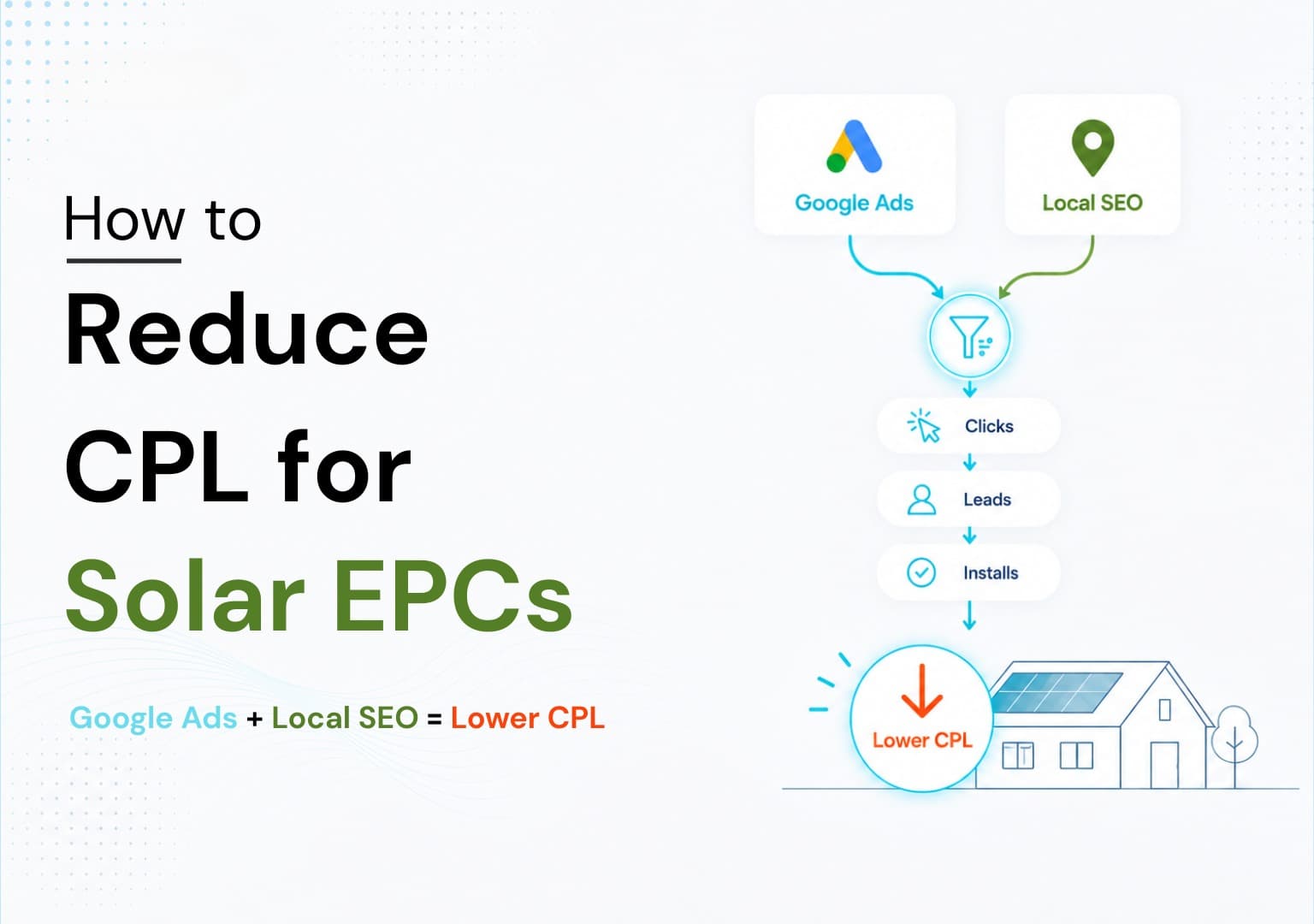
Here's a number that should bother you: $104. That's the average cost per lead that solar companies...
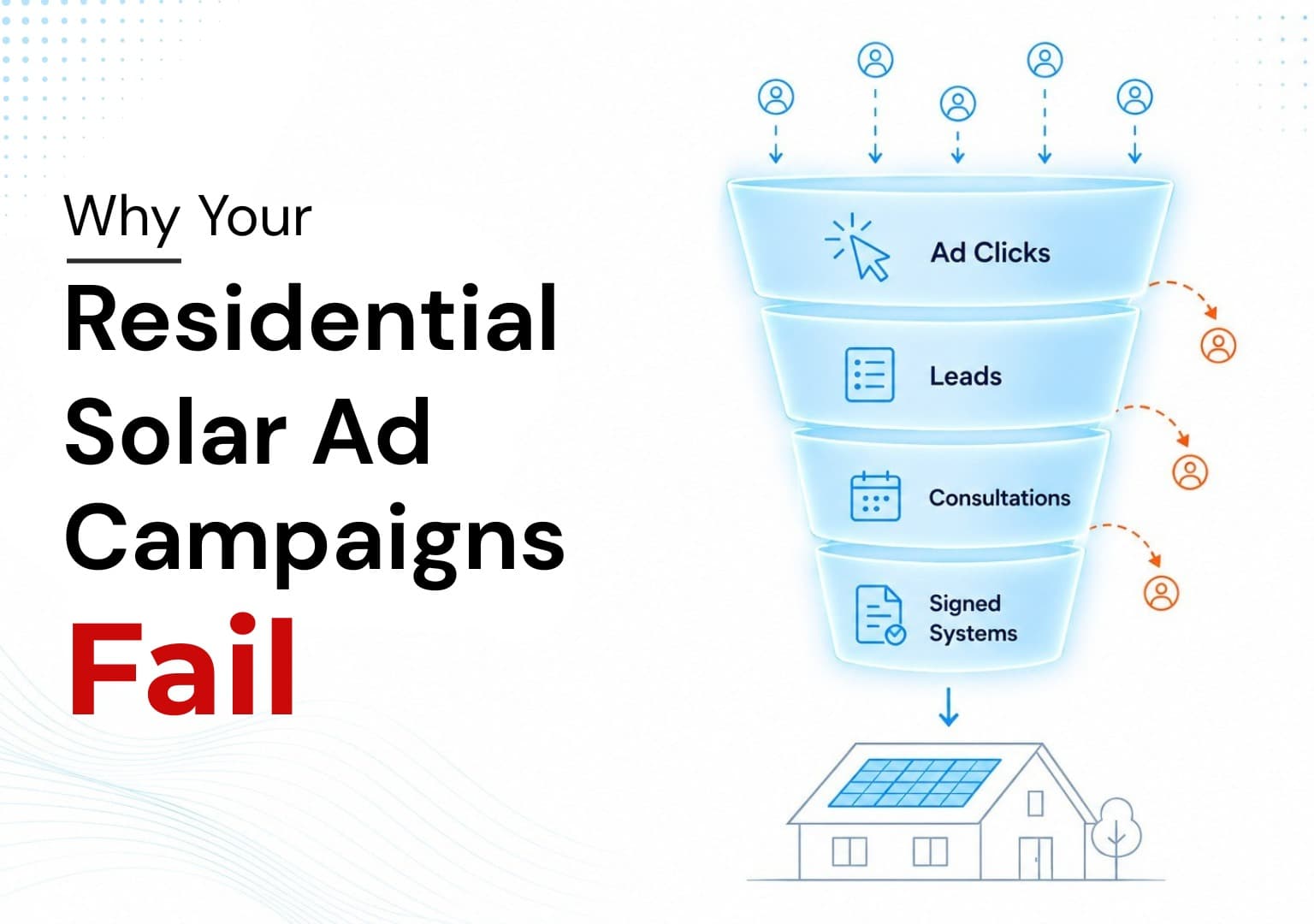
You're pouring money into residential solar ad campaigns. Clicks show up, leads trickle in, and your...